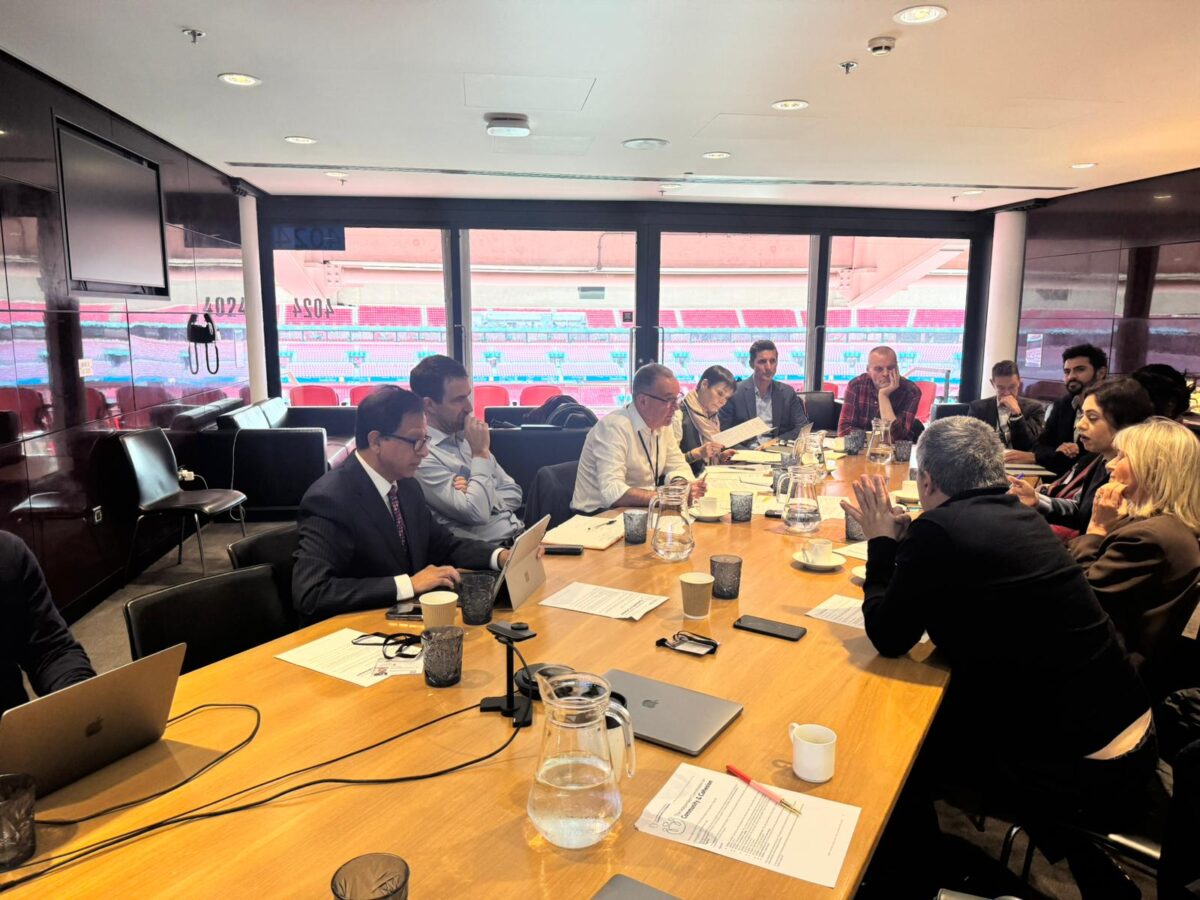
Last week the Independent Commission on Community & Cohesion met at Wembley Stadium to explore a defining question facing the country today: why do so many people feel their voice is no longer reflected in politics or national discourse, and what does that mean for trust in the institutions that shape our common life?
Across the discussion, commissioners reflected on the growing sense of democratic disengagement felt across the country, drawing on insights from a wide range of experts ahead of the full commissioner meeting. As Polly Curtis, Chief Executive of Demos, noted, trust is falling “across all institutions” and many people feel that the systems around them “are not delivering a better life or solving problems”. This diagnosis was reflected in data presented to commissioners, including falling voter turnout, declining volunteering and civic participation, and polling showing that many people feel they have little say over government decisions or confidence in their ability to participate in politics.
While much of the evidence pointed to national frustration and disengagement, commissioners also examined where pockets of strength do exist at a local level. Polling for the Commission found that around seven in ten people believe their own area is a place where people from different backgrounds get on well; a picture reinforced by evidence given by experts on the role of place-based institutions.
Paul Scully, Chair of EFL in the Community, described football clubs as “one of this country’s greatest three-card tricks”: spaces where people come for the game but stay for the relationships. He recalled how, during the pandemic, supporters asked clubs to check on the wellbeing of people they had sat beside for years but barely knew.
Other evidence pointed to the importance of everyday contact across lines of difference. Jon Yates, CEO of the Youth Endowment Fund, spoke about homophily, our instinct to gravitate towards people like ourselves, and the risks created when society reduces the spaces that bring different people together. When connection does happen, he said, “people often find they have more in common than they think.” Bishop Martyn Snow echoed this, stressing the role workplaces, schools and local institutions can play in enabling simple, healthy conversations between people with different experiences and views.
Together, this evidence highlighted the central idea discussed in last week’s all-commissioner meeting: rebuilding trust requires rebuilding voice. People need to feel heard not just during elections, but in the everyday interactions and decisions that shape their lives. And institutions, in turn, need to demonstrate that listening leads to meaningful action.
Next month, commissioners will move on to the final three themes: Digital Connection; Social Media and AI; Identity, Culture and Demography; and Immigration. Having had initial discussions on each of the seven key themes commissioners will then look towards refining and finalising recommendations in the spring.